IT services · software · cloud · integration
Software built with intent.
Infrastructure built to last.
BREAD JUST-IN LTD designs, builds, and maintains custom software, web platforms, and cloud systems, and connects them into workflows that hold up in daily use.

An IT company that treats delivery as a craft.
BREAD JUST-IN LTD is an IT services company working across custom software development, cloud solutions, systems integration, and technical consulting. We take on the parts of technology that are hard to get right: modelling a business accurately in code, running infrastructure that stays up, and making separate systems behave as one.
We work in small, accountable teams with clear scope and steady communication. Every engagement produces documented, maintainable work that your organisation can own and build on, whether we continue to support it or hand it over entirely.
- Approach
- Discovery first, then iterative delivery
- Ownership
- Source, documentation, and access handed over
- Scale
- Focused tools through to full platforms
Six disciplines, one accountable team.
- 01SoftwareCustom applications, APIs, and internal tools built to your domain.
- 02WebPortals, dashboards, and multi-tenant platforms in the browser.
- 03CloudEnvironment design, migration, and infrastructure as code.
- 04IntegrationData flowing reliably between the systems you already run.
- 05ConsultingIndependent assessment, discovery, and architecture guidance.
- 06SupportUpdates, monitoring, and improvement long after launch.

Systems shaped around the way you actually work.
For organisations whose processes do not fit packaged software, we design and build systems from the ground up. The aim is software that models how your business really operates, can be changed as the business changes, and remains understandable to the people who maintain it.
- Internal tools, back-office systems, and line-of-business applications
- Domain modelling, data design, and business-rule engines
- APIs and service layers used by other systems or partners
- Replacement or extension of legacy applications
Web applications that stay fast, accessible, and maintainable as they grow.
Web applications are the most direct way to put functionality in front of customers, staff, or partners. We build them with attention to performance, accessibility, security, and the operational realities of running a product in the long term.
Portals
Customer-facing and self-service applications with secure accounts.
Consoles
Administrative dashboards and operational tooling for teams.
Platforms
Multi-tenant products with billing, roles, and audit trails.
Interfaces
Content and data management built on a shared design system.

Cloud environments designed deliberately.
Cloud platforms offer flexibility, but only when environments are designed deliberately. We help teams plan, build, and operate cloud infrastructure, and modernise existing systems so they can take advantage of managed services without unnecessary risk.
- Cloud architecture and environment design
- Migration of workloads, databases, and file storage
- Infrastructure as code and environment reproducibility
- Observability, backup, and disaster-recovery planning
Make separate systems behave as one.
Most organisations run a mix of tools that were never designed to talk to each other. We build the integration layer that keeps them synchronised, and automate the manual steps in between, so information is consistent and staff can focus on decisions rather than data entry.
Sources
Integration layer
Connectors, rules, schedules
- Validation and transformation
- Retries and exception handling
- Event-driven and scheduled jobs
- Monitoring and alerts
Outcomes
Clarity before commitment.
Some decisions are expensive to reverse. Consulting engagements give you a clear, documented view of options, risks, and trade-offs before committing to a build, a migration, or a vendor. Discovery work turns an idea or a problem statement into a scoped, estimable plan.
Typical outputs
- Written assessment report
- Target architecture and roadmap
- Prioritised backlog with estimates
Typical scope
- Architecture and code reviews of existing systems
- Technology selection and build-versus-buy analysis
- Discovery workshops and requirements definition
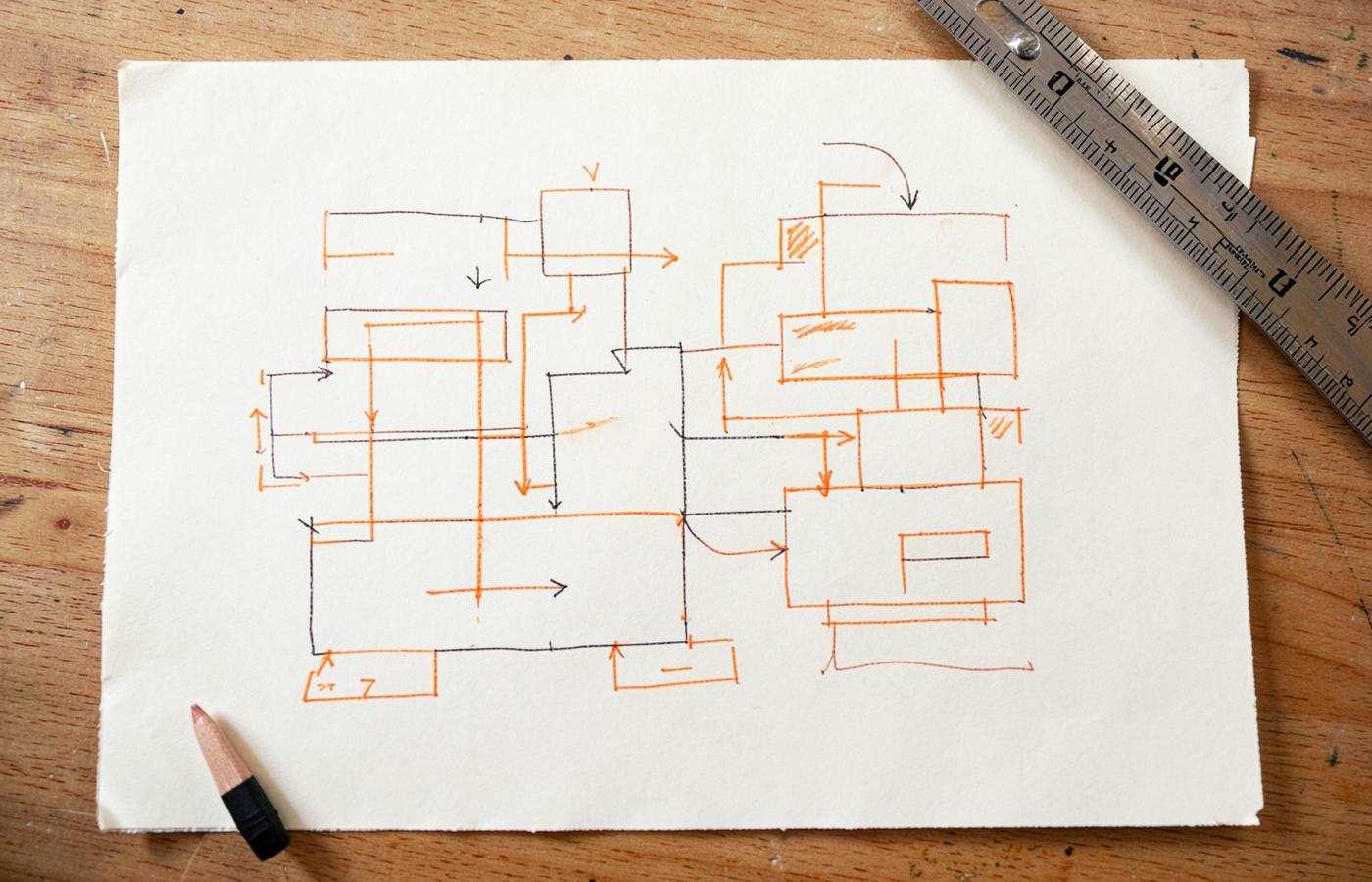
Fig. 08 — Discovery usually starts on paper.
Six stages, each with a visible result.
01
Discover
We clarify goals, constraints, existing systems, and what success looks like.
02
Design
Architecture, data models, and interfaces are agreed before significant build work.
03
Build
Work is delivered in reviewed increments, each one usable and tested.
04
Verify
Automated and manual checks cover function, performance, security, and accessibility.
05
Release
Deployment is rehearsed, documented, and reversible.
06
Support
Monitoring, updates, and improvements continue under an agreed cadence.

Checked at every layer, not just at the end.
Quality and security are practices we apply throughout delivery rather than a phase tacked on before release. The aim is software whose behaviour is predictable and whose risks are understood and documented.
Quality assurance
- Automated unit and integration tests
- Code review on every change
- Performance budgets and profiling
- Accessibility checks against WCAG guidance
- Staged environments mirroring production
Security practices
- Least-privilege access and role design
- Secret management, never credentials in code
- Dependency and vulnerability review
- Authentication and authorisation testing
- Encrypted data in transit and at rest

A working relationship, not a hand-off.
You will always know what is being worked on, what has been finished, and what comes next. We share progress in plain language, keep decisions written down, and flag risks early rather than late.
Software is not finished at release. Dependencies age, requirements shift, and platforms change. Support engagements keep systems healthy through regular updates, monitoring, and incremental improvement, so small issues are handled before they become outages.
- Cadence
- Regular written updates and reviews
- Transparency
- Shared backlog, decisions, and changelog
- Continuity
- Maintenance under an agreed scope
Straight answers to common questions.
- Q1What kinds of organisations do you work with?
- We work with businesses and organisations that need software, infrastructure, or integration work done carefully. Engagements range from a single focused application to longer-term platform development and support.
- Q2How does a project usually start?
- Most projects begin with a discovery conversation by email. We clarify the goal, the systems involved, and the constraints, then propose a scope, an approach, and a first phase of work. Larger initiatives typically start with a short, separately scoped discovery engagement.
- Q3Do you take over existing codebases?
- Yes. We review the existing system first so we understand its structure, risks, and dependencies, then agree how to stabilise, extend, or gradually replace it.
- Q4Which technologies do you use?
- We select technology to fit the problem, the team that will maintain the system, and the environment it runs in. We favour well-supported, widely understood tools over novelty, and we document the reasoning behind each choice.
- Q5Who owns the code and the infrastructure?
- Deliverables are produced for you and handed over with source code, documentation, and access credentials, in accordance with the terms agreed for each engagement.
- Q6How do you handle security and data protection?
- Security is built into design and delivery: least-privilege access, secret management, dependency review, and testing of authentication and authorisation paths. Data-handling requirements are captured during discovery and reflected in the architecture.
- Q7What happens after launch?
- We offer maintenance and ongoing support so systems stay updated, monitored, and improved over time. The scope and cadence of support are agreed with you before launch.
- Q8How can we get in touch?
- Email us at [email protected]. Include a short description of what you are trying to achieve and any relevant context about your current systems.

Start with an email.
Describe what you are trying to achieve, the systems involved, and any timelines. We will reply with questions or a proposed next step.
- Company
- BREAD JUST-IN LTD
- [email protected]
- Website
- breadjustin.com